
What Perimeter Pest Control Actually Means
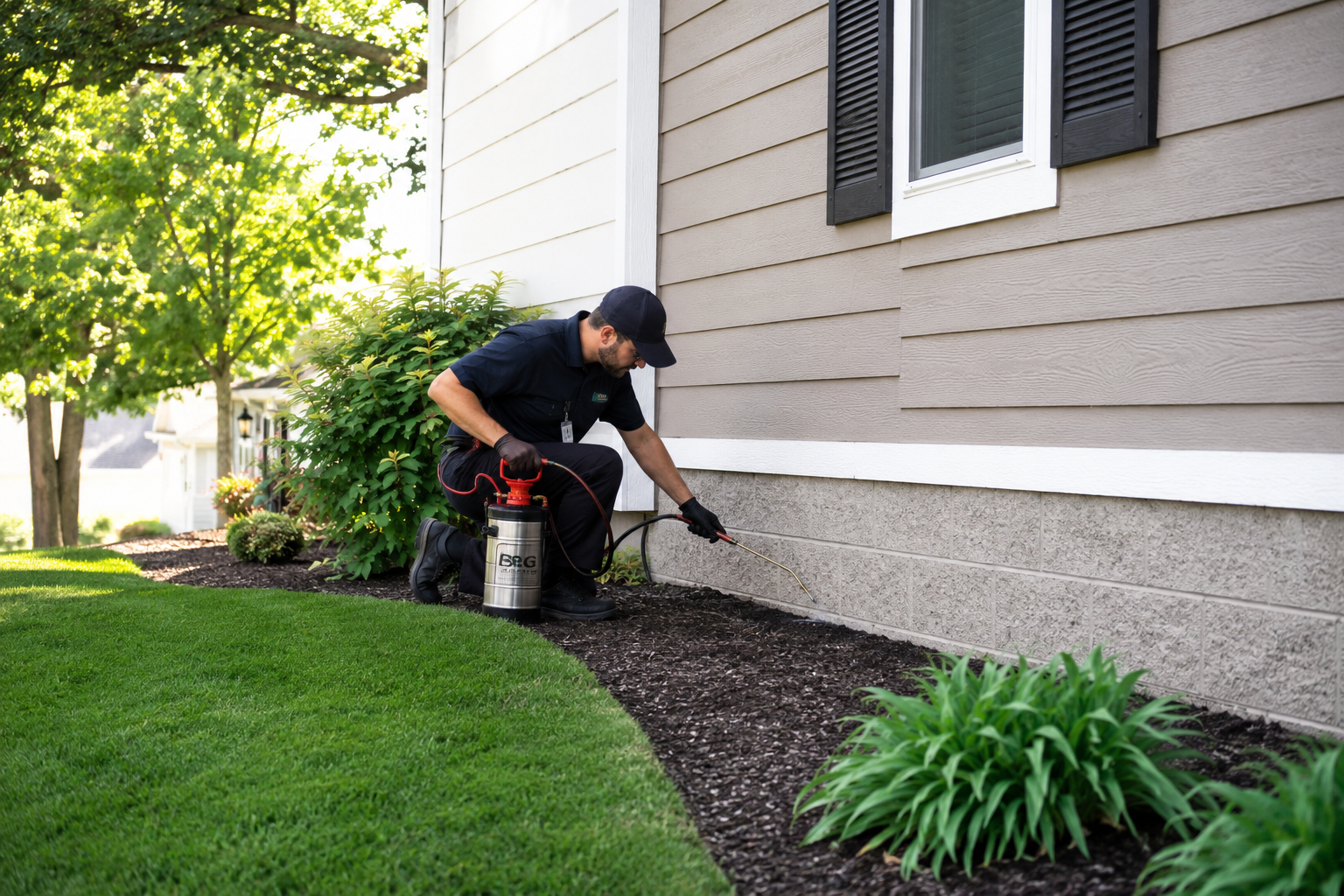
Perimeter pest control is a low-toxicity treatment applied around the outside of your home's foundation, covering the specific points where pests cross from your yard into your living space, such as doors, windows, utility lines, and the base of your siding. It's a maintenance-style service rather than a single fix, built around repeat visits that keep that outer boundary treated over time.
What the Barrier Does
The treatment is applied as a band around your home's exterior, typically extending a few feet out from the foundation and a few feet up the structure itself. That band works by intercepting pests as they travel along the ground or up the foundation, before they reach a crack, gap, or threshold they could use to get inside.
The products used are lower-toxicity, kid-friendly and pet-friendly once dry. Ingredient-forward products, using named compounds rather than a brand name, give homeowners transparency into what's actually being applied around their yard. If you're curious why we make these choices, we've written about why we skip pyrethrins in favor of lower-toxicity options.
Which Pests Does This Target?
Perimeter treatments are most effective against pests that travel along the ground or foundation to get inside, including ants, spiders, roaches, earwigs, and other crawling insects that use foundation cracks, gaps around utility penetrations, and overgrown vegetation as their route indoors. Pollinators like bees and butterflies are not targets of this service, and treatments are applied with that distinction in mind.
Why Timing Matters
A treatment applied in early spring won't hold the same effectiveness by late summer, since pest activity shifts with the seasons. Spring and early summer tend to bring higher ant and spider activity as insects search for food and shelter, while overgrown vegetation in late summer can create new bridges across a perimeter that was previously well covered. Scheduled, recurring treatments account for these shifts. A single application does not.
Why Exterior Treatment Is the Right Starting Point
Of the two ways to deal with pests around a home, treating the perimeter or treating individual rooms as pests appear, only one addresses the actual path pests take to get inside. Perimeter treatment works at that entry point directly, which is why it's the starting point for reducing pest activity rather than a supplement to it. It also means less disruption day to day: no need to clear cabinets or vacate rooms, since the work happens outside.
What to Expect from a Perimeter Pest Control Visit
A typical visit includes inspection of foundation cracks, entry points, and vegetation lines, followed by targeted application along the perimeter and around common problem areas like door thresholds, window wells, and utility penetrations. Technicians will also flag any changes they notice, like new gaps, moisture issues, or vegetation growth, that could affect coverage between visits.
If you're dealing with ants, spiders, or other crawling pests working their way indoors, addressing them at the perimeter is the place to start. We'd love to help you build a treated boundary around your home. Explore our household pest control services or get started with a quote to see how a treated perimeter fits into a broader plan for keeping pests out of your yard and away from your door.
Frequently Asked Questions
Is perimeter pest control safer for kids and pets?
Yes. Treatments are formulated to be kid-friendly and pet-friendly once the application has dried, using low-toxicity, ingredient-forward products rather than harsher alternatives.
How often does the perimeter need to be treated?
Pest activity shifts with the seasons, so a single application won't hold up year-round. Scheduled, recurring treatments are what keep the barrier effective as conditions change.
Will perimeter treatment get rid of pests completely?
Perimeter treatment significantly reduces the number of pests making their way indoors by targeting them at the entry point, but it works best as part of an ongoing program rather than a one-time fix.
Does perimeter pest control treat the inside of my home too?
No. This service is exterior-only, focused on the foundation, entry points, and vegetation lines around your home. It's designed to stop pests before they get inside, not to treat rooms or interior spaces.
Do I need to be home during treatment?
No. Since the work happens outside around your home's perimeter, there's no need to clear cabinets or vacate rooms, making it easy to fit into your regular yard care routine.
Will perimeter treatment harm bees or other pollinators?
Pollinators like bees and butterflies are not targets of this service, and applications are made with that distinction in mind.