
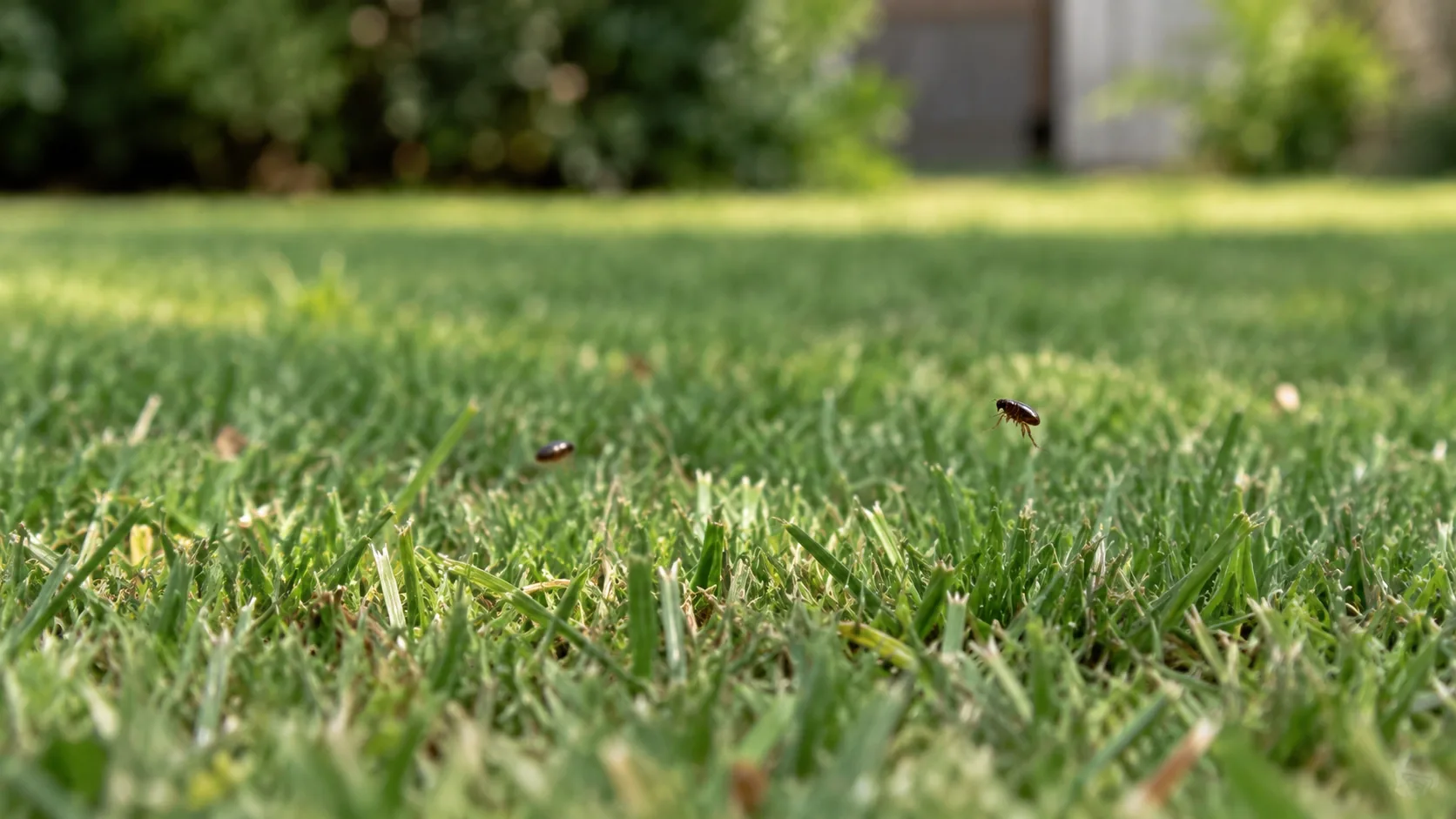
How to get rid of fleas in yard areas starts below the grass, because most fleas in your yard are eggs and larvae hiding in shady soil, not adults you can see.
That's the part most homeowners miss. You spray the lawn, see fewer fleas jumping for a few days, and then they're back. Meanwhile, flea and tick yard treatment in Atlanta works differently, because it treats the soil stages, not just the adults on the surface. Here's why yards get fleas suddenly, how long they actually stick around, and what a layered treatment looks like.
Yards Get Fleas Suddenly for a Few Predictable Reasons
A flea problem rarely builds up slowly. One week the yard is fine, the next week your dog is scratching constantly. That jump usually comes down to dormant pupae. Flea pupae can sit in a protective cocoon for months, waiting for vibration, warmth, or carbon dioxide to signal that a host is nearby before they hatch.
A few common triggers set that off:
- Stray cats, raccoons, or neighborhood wildlife passing through and dropping eggs
- A pet picking up fleas elsewhere and shedding eggs in shaded parts of the yard
- A stretch of warm, humid weather that wakes up pupae that were dormant
Atlanta and Charlotte stay warm and humid well into fall, which is part of why fleas stay active there longer than in cooler climates.
Fleas Can Survive in Your Yard Longer Than You'd Expect
That sudden-onset feeling makes more sense once you see how long each stage of a flea's life actually lasts. Adult fleas are only a small slice of the population you're dealing with. Most sources put adult fleas at around 5% of the total population in an infested area, with eggs, larvae, and pupae making up the rest, hidden in soil, mulch, and shaded grass.
Eggs can hatch in a matter of days under warm, humid conditions. Larvae then spend one to several weeks developing, and because they're sensitive to light, they burrow into soil, thatch, and shaded areas instead of staying out in the open. Pupae are the toughest stage, since they can stay dormant for months until conditions are right. Even though an individual adult flea only lives seven to ten days on a host, the soil-based stages keep refreshing the population unless they're addressed directly.
What Kills Fleas in the Yard
That soil-hiding behavior is exactly why killing the adults you can see doesn't solve the problem. The harder part is reaching eggs, larvae, and pupae sitting a few inches down in shaded, moist soil, since a standard spray mostly stays on the surface.
A single treatment type tends to underperform over time for that reason. A flea yard treatment that actually holds up combines something that kills adults on contact with something that interrupts the soil-based stages before they mature.
Backyard Care's Three-Layer Approach to Yard Flea Treatment
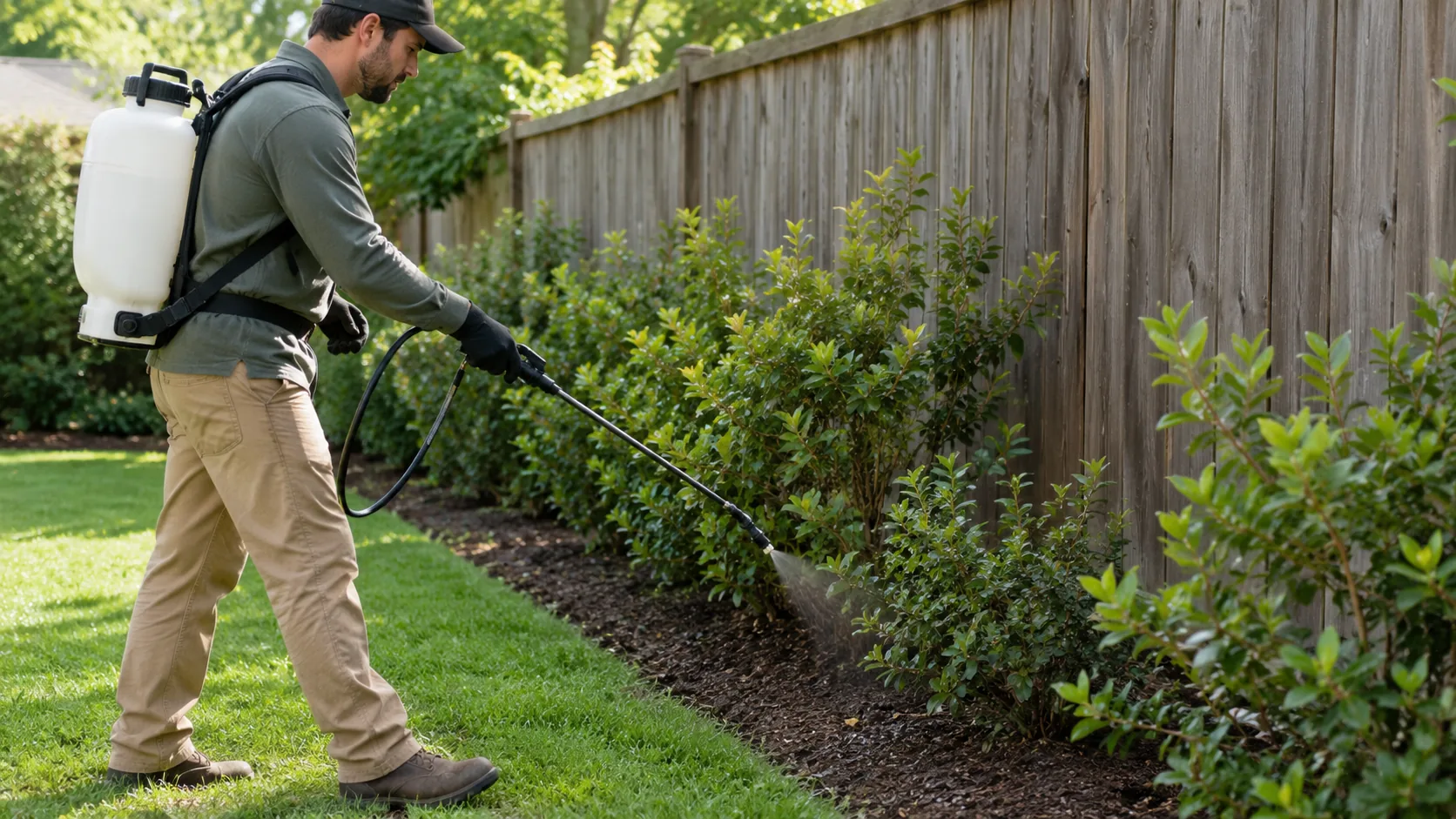
Backyard Care Company treats yard fleas with a liquid perimeter barrier, granular larvicide every 4 to 5 weeks, and beneficial nematodes every 21 days during warmer months.
- Liquid perimeter barrier: Applied around fence lines, flower beds, and other shaded edges where fleas and ticks tend to gather, this layer targets adult fleas on contact.
- Granular larvicide: Spread across the yard on a recurring schedule, this layer goes after eggs and larvae in the soil before they can mature into biting adults.
- Beneficial nematodes for fleas: Nematodes like Steinernema carpocapsae are microscopic roundworms that occur in soil and actively seek out flea larvae, entering through natural openings and releasing bacteria that kill the larvae within a few days. They target soil-dwelling larvae specifically and pose minimal risk to pets, people, and other beneficial insects in the yard.
Backyard Care Company has completed more than 10,000 services across Metro Atlanta and Greater Charlotte. Backyard Care Company customers can cancel any service at any time, and flea and tick yard treatment runs with no contract, with a free re-treatment if activity picks up between visits.
Yard Habits That Help Keep Fleas Down Between Treatments
Those three layers do most of the work, but a few habits make it easier to hold the line between visits:
- Mow regularly, since shorter grass holds less humidity and gives larvae fewer places to hide
- Rake up leaf litter and yard debris where eggs and larvae collect
- Limit access for stray animals and wildlife where possible
- Wash outdoor pet bedding on a regular schedule
Pet-friendly lawn care practices, like keeping grass at a consistent height and clearing thatch buildup, support this without working against a flea treatment plan.
When to Call a Flea Treatment Pro
The same shaded, humid corners that draw fleas tend to draw ticks too, which is why the two are usually treated together. If you're not sure what you're looking at on your pet or in the grass, what a tick looks like breaks down the difference, and what pet-safe pest control means covers how this kind of layered treatment approach is defined. The barrier-spray layer on its own is explained further in perimeter pest control.
If a DIY spray keeps wearing off after a week or two, that's usually a sign the soil-based stages weren't addressed. A professional program layers a barrier spray, larvicide, and nematodes on a schedule so each stage of the flea life cycle gets covered, not just the adults you can see. Charlotte homeowners can find the local version of this service through flea and tick treatment in Charlotte.
Fleas back after every spray? Get a free flea and tick yard treatment quote from Backyard Care.
FAQ
How can I get rid of fleas in my outdoor yard?
Treat the soil, not just the grass surface. A combination of a perimeter barrier spray for adult fleas, granular larvicide for eggs and larvae, and beneficial nematodes for larvae in shaded soil covers each stage of the flea life cycle. Mowing regularly and clearing leaf litter helps keep the population down between treatments.
How long do fleas last in your yard?
It depends on temperature and humidity. Eggs can hatch within days in warm, humid weather, larvae develop over one to several weeks, and pupae can stay dormant in their cocoons for months until conditions trigger them to emerge. Adult fleas themselves only live seven to ten days on a host, but the soil-based stages keep the cycle going unless they're treated directly.
Why is my yard suddenly infested with fleas?
Dormant pupae can sit in the soil for months and hatch all at once when warmth, vibration, or a nearby host signals it's time. A stretch of warm, humid weather, a visit from wildlife or a stray animal, or a pet picking up fleas elsewhere are the most common triggers for a sudden jump.
What will 100% get rid of fleas?
No single spray reaches every stage at once, since eggs, larvae, and pupae hide in shaded soil where surface treatments don't penetrate. Combining a barrier spray, soil larvicide, and beneficial nematodes covers each stage of the life cycle and gives you the most complete reduction available, applied on a recurring schedule since fleas can keep coming in from outside the yard.
Do beneficial nematodes kill fleas?
Yes. Species like Steinernema carpocapsae are microscopic roundworms that seek out flea larvae in the soil, enter through natural openings, and release bacteria that kill the larvae within a few days. They specifically target soil-dwelling larvae and pose minimal risk to pets, people, and other beneficial insects.