
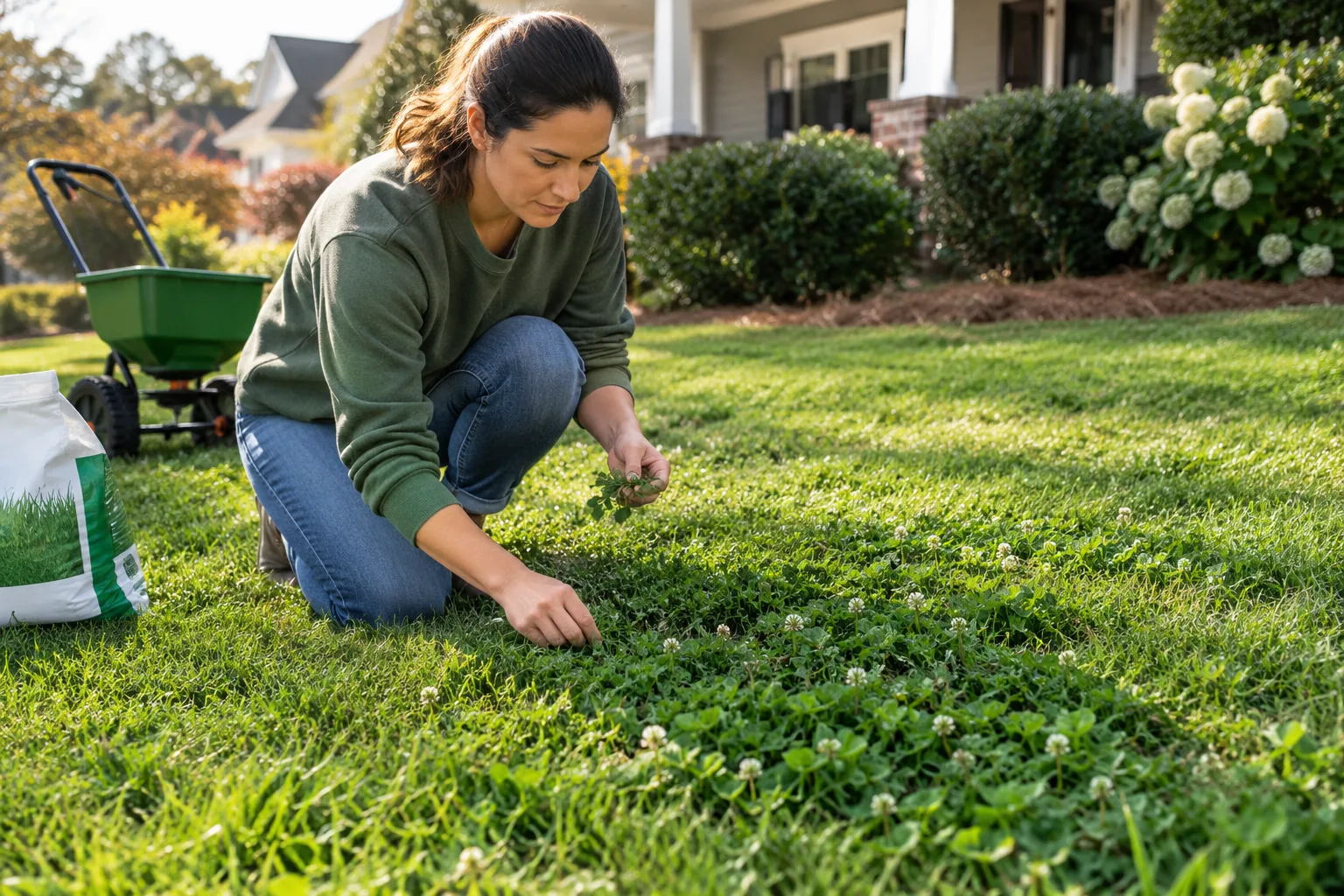
How to get rid of clover in lawn comes down to two jobs: treat the clover you see this fall, and fix the thin, low-nitrogen soil that let it move in.
If you've noticed patches of clover creeping across your yard, you're not imagining it, and you're not alone. It shows up in some of the best-kept lawns in Atlanta and Charlotte, usually right around the time homeowners are hosting a fall get-together or trying to get the yard looking good before the holidays. The good news is clover isn't a sign you've failed at lawn care. It's more like a message from your soil.
Why Do I Have So Much Clover in My Lawn?
Clover is opportunistic. It doesn't need much nitrogen to thrive, so it moves into the spots where grass is struggling to get enough. Thin patches, compacted soil, and areas that have gone a season or two without fertilization are exactly where clover finds room to spread.
That's why pulling the visible clover rarely solves the problem for long. If the soil underneath is still thin and nitrogen-poor, something will fill that space again, whether it's clover or another opportunistic weed. Treating clover without addressing the soil is a bit like mowing over a pothole. It looks better for a week.
Why Fall Is the Right Time to Treat Clover in GA and NC
Across Atlanta, Charlotte, and the rest of the Southeast, fall is a smart window for clover control. Grass is coming out of summer stress and starting to put energy into its root system again, which means it's better able to bounce back after treatment. Cooler, more consistent temperatures also give any weed control product time to work without the added stress of summer heat.
Treating in fall also sets up spring success. Clover that isn't dealt with before winter often comes back stronger once temperatures warm up, because it had all winter to establish itself with less competition from dormant grass.
Common DIY Clover Methods, and Why They Often Fall Short
It's worth addressing the home remedies homeowners hear about most, because a few of them cause more problems than they solve.
Dish Soap
Dish soap and water can dry out clover's leaf surface enough to make it look wilted within a day or two, which is why the method gets so much attention online. The problem is that clover regrows from creeping stems and roots below the surface, and dish soap doesn't reach them. Most homeowners see the clover return within a couple of weeks.
Vinegar
Vinegar is a contact treatment, meaning it only affects the parts of the plant it touches. It can scorch clover leaves, but it's just as likely to damage the surrounding grass, and it won't touch the root system that lets clover keep spreading.
Both methods can feel satisfying in the moment, but they treat the symptom, not the cause. That's the real limitation of most DIY clover control: it deals with what's visible today without addressing why the space was vulnerable to clover in the first place.
How to Kill Clover Without Killing Grass
The safer approach is a treatment designed to target broadleaf weeds like clover while leaving turf grass unaffected, paired with a soil program that builds up the nitrogen levels clover depends on being low. That combination does two things at once: it addresses the clover that's already there, and it makes the lawn a less hospitable place for clover to return.
This is the idea behind Backyard Care Company's weed control service in Atlanta and weed control in Charlotte. Rather than a single spray-and-hope treatment, it's paired with a soil restoration lawn fertilization program delivered across six visits a year, timed to what the lawn actually needs at each point in the season.
If your lawn has thin or bare patches alongside the clover, aeration and overseeding is often part of the conversation too. Aeration relieves the compaction that made those areas hospitable to clover, and overseeding helps grass fill back in before another weed gets the chance.
How to Get Rid of Clover Naturally
If you'd rather avoid synthetic herbicides altogether, the most reliable natural approach is still soil-focused:
- Overseeding thin areas
- Top-dressing with compost
- Maintaining consistent watering and mowing height so grass can out-compete clover for space and light
- Hand-pulling small patches works for isolated spots, as long as you remove the root system, not just the visible leaves.
None of these methods work overnight, but they address the same root cause a treatment program does, just more gradually.
Protecting Your Yard
Clover often isn't the only clue that your lawn's soil needs attention. If you've also noticed patches turning yellow, it's worth reading through why your lawn is turning yellow, since the underlying cause is frequently connected. And if you're curious about the soil science behind all of this, our piece on soil microbes breaks down why healthy soil biology plays such a big role in keeping weeds out long-term.
Getting Started This Fall
Clover in the lawn is annoying, but it's also useful information. It's telling you where the soil needs support. Treating the clover you can see, and building up the soil so it doesn't have room to move back in, is the combination that actually holds up season after season.
If you’re tired of clover coming back every spring, you can get a free weed control quote from Backyard Care. And if you’re not sure if you're in our service area, check our service areas here, or reach out to our team with any questions.
FAQ
How do you kill clover without killing grass?
Use a broadleaf weed treatment specifically formulated to target clover and similar weeds without affecting turf grass, and pair it with fertilization that strengthens the grass so it can compete for the space clover leaves behind.
Why do I have so much clover in my lawn?
Clover thrives in thin, compacted, or low-nitrogen soil where grass isn't growing thick enough to crowd it out. Its presence is usually a sign the soil needs more nutrients, not a sign of poor lawn care.
Will Dawn dish soap kill clover?
It can dry out and wilt the visible leaves within a day or two, but it doesn't reach the roots or creeping stems clover spreads from, so regrowth within a couple of weeks is common.
What's the best time to kill clover?
Fall is the ideal window in Georgia and the Carolinas. Cooler temperatures let grass recover from summer stress and rebuild before clover has a chance to spread again in spring.
How do I get rid of clover naturally?
Focus on the soil: overseed thin patches, add compost, keep watering and mowing consistent, and hand-pull isolated patches by the root. These methods take longer than a treatment program but address the same underlying cause.