
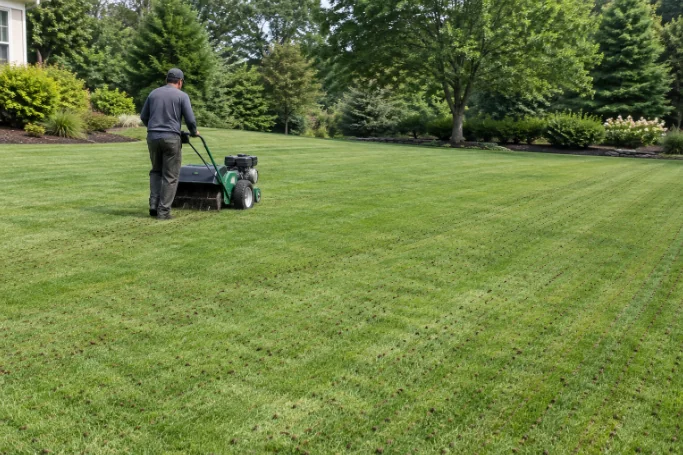
What is lawn aeration? It is the step that opens up compacted soil so water, air and nutrients can reach grass roots, and it is the fix for a lawn that stays thin no matter how much you water and feed it.
Most yards in Atlanta and Charlotte sit on heavy clay that packs tight under foot traffic, mowing and rain. If water pools or runs off, patches never fill in, or the soil is too hard to push a screwdriver into, your yard probably needs it.
Lawn aeration breaks up the layer that blocks your grass roots
Grass roots need air, water and space to grow. Compacted soil takes all three away. The particles press together, the pores between them close, and the top few inches turn into a dense layer that roots struggle to get through.
Aeration makes openings through that layer. Rain soaks in instead of running toward the street. Fertilizer reaches the root zone instead of sitting on the surface. Roots follow the new channels down and build a deeper, stronger system.
Signs your yard needs lawn aeration
You do not need a soil lab to spot compaction. Walk the yard after a rain and look for these:
- Water pooling or running off. Puddles that linger, or water that streams down the slope of the yard, mean the soil is not absorbing what falls on it.
- Thin patches that never fill in. If bare or sparse spots stay bare after seeding, feeding and watering, the problem is often below the surface.
- Soil you cannot push a screwdriver into. Try it a day or two after rain or watering. If a standard screwdriver will not sink in by hand, the soil is compacted.
Compaction can also look like other problems. If the grass is fading but you are not sure why, why your lawn is turning yellow covers the other common causes so you can rule them in or out.
Core aeration and coreless aeration open the soil in different ways
Both methods relieve compaction. They differ in how they open the soil and in what they leave on your lawn afterward.
Core aeration pulls plugs out of the soil
What is core aeration? It is the traditional method. A machine with hollow tines pulls small plugs of soil out of the ground, usually a couple of inches deep, and drops them on the surface.
Those plugs break down over a few weeks with mowing and rain. Until then, the lawn looks like it has been sprinkled with small brown cylinders. Core aeration also gives seed direct contact with soil, which is why it is common before overseeding.
Coreless aeration opens the soil and leaves nothing behind
Coreless aeration uses a granular, biology-rich treatment that breaks apart compacted clay without removing anything. There are no plugs to clean up or wait out, so the lawn looks tidy the same day.
It works well in heavy clay because it breaks up the tight layer and creates pathways for water and amendments to move down.
Heavy Southern clay is why aeration matters in Atlanta and Charlotte
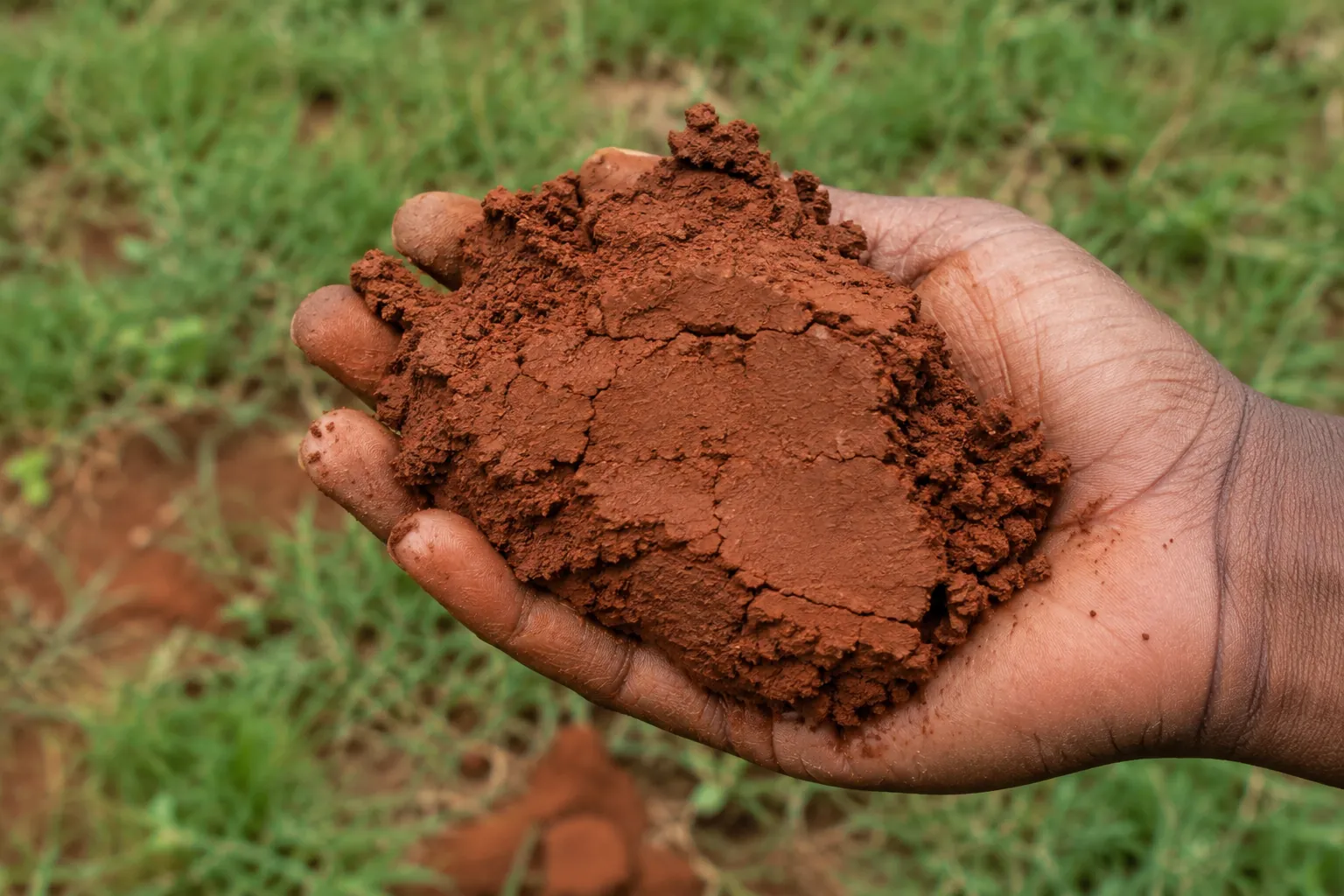
Clay soil is made of very fine particles. They pack close together, drain slowly, turn sticky in wet weather and harden in summer heat. Foot traffic, mowers and even heavy rain press them tighter each year.
New subdivisions add another layer to the problem. Grading often strips away topsoil and leaves compacted subsoil under the sod. A lawn grown on that base can look fine at first and then decline once the roots hit the hard layer.
That is why lawn aeration is a routine part of healthy turf care here instead of an occasional extra. If you are in the Carolinas, the page on lawn aeration in Charlotte covers how the service works for local yards.
The benefits of lawn aeration show up at the roots first
The benefits of lawn aeration start below the surface and work their way up to the blades:
- Water soaks in deeper with less runoff.
- Air reaches the root zone, which supports root growth.
- Fertilizer and soil amendments move into the soil instead of sitting on top.
- Seed makes better contact with soil during overseeding.
- Grass handles heat and foot traffic better because the roots have more room.
None of this happens overnight. Roots grow over weeks, and a lawn that has been compacted for years improves over several seasons of good care.
Timing depends on your grass type
Aerate when your grass is actively growing so it recovers fast. That window is different for each grass type.
- Fescue is a cool-season grass. Fall is the best time, when air temperatures ease and roots are growing again. Aerating in early fall also sets you up for overseeding, since new seed germinates well in warm soil and cooler air. Aeration and overseeding work best as a pair for fescue lawns.
- Bermuda and zoysia are warm-season grasses. Late spring to summer is their window, when they grow fastest and fill in openings quickly. Aerating them in fall, as they head toward dormancy, leaves less time for recovery.
Match the timing to the grass first. Aerating fescue in midsummer heat or bermuda in late fall puts stress on a lawn at the wrong moment.
Aeration works best when the soil gets what it needs afterward
Opening the soil is half the job. The other half is what goes into those openings.
Backyard Care lawn fertilization is a soil restoration program run over six visits a year. Applications include organic fertilizer, humates, biochar and microbial soil amendments across the whole property, reaching ornamentals, gardens and trees as well as the turf. Pricing starts at $152 a quarter for about 3,000 square feet.
The soil restoration lawn fertilization program pairs with a coreless aeration program so amendments can reach the root zone through the pathways aeration creates. Humates and healthy soil explains how humates build the foundation. Soil microbes explains why the living part of the soil matters just as much.
The Backyard Care Company has completed more than 10,000 services. Backyard Care is locally-owned and operated across Metro Atlanta and Greater Charlotte.
Ready to see what your lawn needs? Get an Aeration and Overseeding Quote
Frequently asked questions about lawn aeration
When should you aerate your lawn?
Aerate when your grass is actively growing. For fescue, that means fall. For bermuda and zoysia, it means late spring to summer. Aerating during active growth lets the lawn recover quickly and fill in the openings.
Is it worth aerating your lawn?
It is worth it if your soil is compacted, which is common in clay. Aeration helps water, air and nutrients reach the roots, and it makes fertilizer and overseeding work better. A lawn on loose, healthy soil may not need it every year.
What are the disadvantages of aerating?
Core aeration leaves plugs on the lawn for a few weeks. Aerating at the wrong time of year can stress the grass. Machines can also damage sprinkler heads and shallow lines that are not marked first. Aeration does not fix every lawn problem, so it works best alongside good mowing, watering and feeding.
How do I aerate my lawn myself?
Rent a core aerator, mark sprinkler heads and shallow lines, and water the lawn a day or two ahead so the soil is moist. Make passes in two directions and leave the plugs to break down. Overseed right after if you have fescue. Rental machines are heavy, so plan for the hauling.
How much does lawn aeration cost?
Lawn aeration cost depends on lot size, the method used and whether overseeding is included. Professional service is typically quoted after a look at your yard. Renting a machine costs less up front but adds your time, transport and seed.