
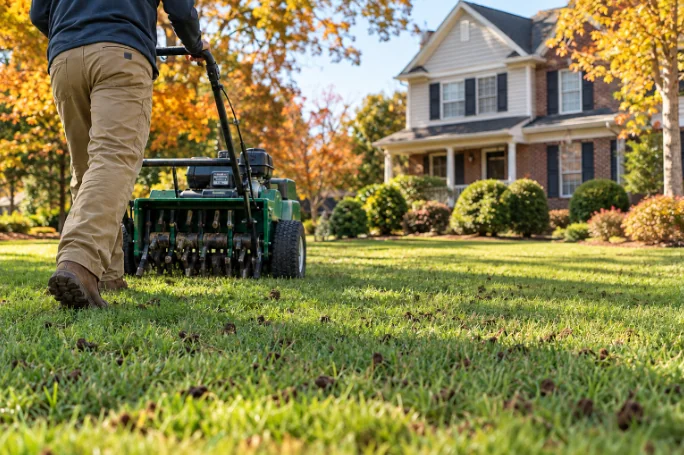
The best time to aerate a lawn in NC is early September to mid-October, and in Charlotte that window is the difference between a fescue lawn that thickens up and one that thins out by July.
Why Charlotte Lawns Get So Compacted
You water the lawn, fertilize it, and mow it on schedule, but by August it still looks tired. Puddles sit after a summer storm, and a few days later the same spots are dry and cracked.
That's the Piedmont clay at work. Charlotte yards sit on heavy red clay made of very fine particles that pack together tightly. All summer, foot traffic, mowers, kids, dogs and heavy thunderstorms press it down even further.
Grass roots need small pockets of air and water in the soil to grow. When clay compacts, those pockets close up. Water runs off instead of soaking in, and fescue roots stay short and shallow. Shallow roots have a hard time handling heat and dry spells, which is one reason why your lawn is turning yellow in midsummer.
Aeration reopens the soil so water, air and nutrients can reach the roots. Overseeding fills in thin areas with new grass. Done together, aeration and overseeding help each other: looser soil gives new seed a better place to take hold.
Signs Your Fescue Lawn Needs Aeration
A simple check is the screwdriver test. After a normal watering, push a screwdriver into the lawn. If it struggles to go in more than an inch or two, the soil is likely compacted.
Other signs include water pooling or running off the lawn, thin or bare patches that never fill in, grass that yellows quickly in dry weather, and worn areas along paths, play spaces or where the dog runs. If several of these sound familiar, your lawn is a good candidate for fall aeration.
Why Fall Is the Best Time to Aerate Fescue in NC
Tall fescue is a cool-season grass. It does its best growing in the mild weather of fall and spring, and it mostly holds on through a Charlotte summer rather than thriving in it.
Fall gives new seed two advantages at once. The soil is still warm from summer, which helps seed sprout quickly. Then the cooler months that follow give seedlings a long stretch to build roots before the next heat wave.
That's why the answer to when to aerate and overseed is once a year, in fall. Early September can still bring hot, dry weeks, so watering matters. After mid-October, cooling soil slows germination, and young grass heads into winter smaller and weaker.
Why Spring Aeration Works Against Fescue
Spring feels like a fresh start, so it's a common assumption that it's the right time to work on the lawn. For fescue in Charlotte, it usually isn't.
Seed sown in spring has only a few weeks before summer heat arrives. Many young seedlings don't have deep enough roots to make it through July and August. Spring is also when crabgrass and other summer weeds begin sprouting, and freshly opened soil gives them an easy place to start.
Warm-season grasses like Bermuda and zoysia follow a different calendar and are typically aerated in late spring or early summer. For fescue, fall is the season to plan around.
Why You Shouldn't Overseed After a Pre-Emergent
This is the rule that catches many homeowners off guard. Pre-emergent weed control works by stopping seeds from sprouting. It can't tell the difference between crabgrass seed and the fescue seed you just spread.
If a pre-emergent is active in your soil, new grass seed may never come up. How long that lasts depends on the product, so always check the label before planning your overseeding date.
In practice, that means skipping fall pre-emergent on areas you plan to overseed. In spring, hold off on pre-emergent until the new grass is established and has been mowed a few times, again following the product label.
How to Prepare Your Lawn and Care for New Seed
The week before, mow a little shorter than usual without scalping the lawn, and clear away leaves and debris so seed can reach the soil. If the weather has been very dry, a light watering a day or two ahead helps.
After overseeding, the goal is steady moisture. Water lightly and often enough to keep the top layer of soil damp until the seedlings are up and growing, then shift to deeper, less frequent watering. Keep foot traffic off the lawn when you can, wait to mow until the new grass reaches normal mowing height, and gently clear falling leaves so they don't smother young grass.
A fall feeding supports new seedlings as they root in. If you're not sure how to time it, lawn fertilization in Charlotte can be planned alongside your aeration so the two work together.
How Backyard Care Aerates Charlotte Lawns
Backyard Care offers lawn aeration in Charlotte using a granular, coreless method. It breaks up compacted clay without leaving soil plugs scattered across your lawn.
The service is scheduled once a year in fall, the make-or-break window for Charlotte fescue. It also includes microbial soil amendments that support the living community in your soil, which plays a big role in root health. You can learn more about soil microbes and why they matter. The approach is kid-friendly, pet-friendly and pollinator-friendly.
Overseeding in Charlotte is a separate service, so you can pair it with aeration or add it where your lawn needs it most. The Backyard Care Company serves the Greater Charlotte area as well as Metro Atlanta.
Get a Charlotte Aeration and Overseeding Quote
A Thicker Lawn Starts With One Good Fall
A healthier fescue lawn comes down to using the right few weeks each fall and building on that year after year. Loosen the clay, seed at the right time, keep new grass moist, and keep pre-emergent out of the way.
Each season of consistent care adds up to deeper roots and a lawn that handles Charlotte summers better. If you have questions about your yard, talk with our team.
Frequently Asked Questions
How can I tell if my lawn needs aerating?
Try the screwdriver test after watering. If it's hard to push in more than an inch or two, or water pools and runs off, your soil is likely compacted. Thin patches and grass that yellows quickly in dry weather are other common signs.
Is it okay to aerate my lawn and then fertilize it?
Yes. Fertilizing after aeration and overseeding helps feed young grass as it roots in. Loosened soil also helps nutrients reach the root zone.
What are the most common lawn aeration mistakes?
Aerating fescue in spring instead of fall, overseeding while a pre-emergent is active, letting new seed dry out, mowing too soon, and treating one aeration as a permanent fix rather than a yearly habit.
How late is too late to aerate a lawn in Charlotte?
Aim to have aeration and overseeding done by mid-October. After that, cooling soil slows germination, and seedlings may go into winter too small to hold up well.
Can I overseed after applying pre-emergent?
Usually not right away. Most pre-emergents stop grass seed from sprouting along with weed seed. Check your product label for the waiting period, and skip fall pre-emergent on areas you plan to overseed.