
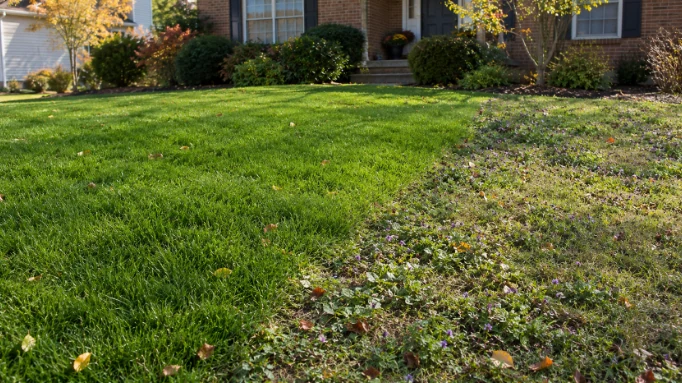
Apply fall pre-emergent when soil temperature drops to around 70°F and keeps falling, which typically happens in mid-September in Atlanta and Charlotte. It stops weeds like poa annua, henbit, and chickweed from germinating, but it won't touch weeds that have already sprouted, and it can't be paired with overseeding in the same window.
Fall pre-emergent is a weed control step many homeowners skip, and skipping it is a big reason a lawn turns into a carpet of poa annua and henbit by February. By the time those weeds are visible and green in late winter, the window to stop them was already closed months earlier, usually back in September.
Why February Lawns Are Full of Weeds Nobody Planted
Walk any untreated lawn in Atlanta or Charlotte in late winter and you'll find the same culprits: poa annua (annual bluegrass) forming pale seed heads, henbit with its small purple flowers, and chickweed spreading low and fast between the blades of dormant turf. None of that showed up overnight. The seeds were sitting in the soil since late summer, waiting for soil temperatures to drop into their germination range. Fall pre-emergent works by intercepting that process before it starts.
What a Pre-Emergent Actually Does
A pre-emergent herbicide stops weed seeds from germinating. It forms a chemical barrier in the top layer of soil that disrupts seedlings as they try to sprout. If henbit or chickweed is already visible in your yard, a pre-emergent application does nothing for it, since the seed has already sprouted. At that point you need a post-emergent product instead. Apply too late, after germination has already begun, and the product has essentially nothing left to do.
Most effective pre-emergent products fall into a low-toxicity, caution-tier category of synthetic herbicides, since no organic option exists for controlling poa annua and other cool-season grassy weeds. These products carry the same EPA signal-word rating as household cleaners like Lysol.
The Soil Temperature Trigger
Pre-emergent timing isn't tied to a date on the calendar. It's tied to soil temperature: apply once soil temperature drops to around 70°F and keeps trending down, not just dipping briefly. In Atlanta and Charlotte, that's typically mid-September, though a warm fall can push it into early October and an early cold snap can pull it forward.
Watch the soil, not the month. Waiting until Thanksgiving is almost always too late, since poa annua and henbit have usually already germinated by then.
Bermuda and Zoysia Lawns Versus Fescue Lawns
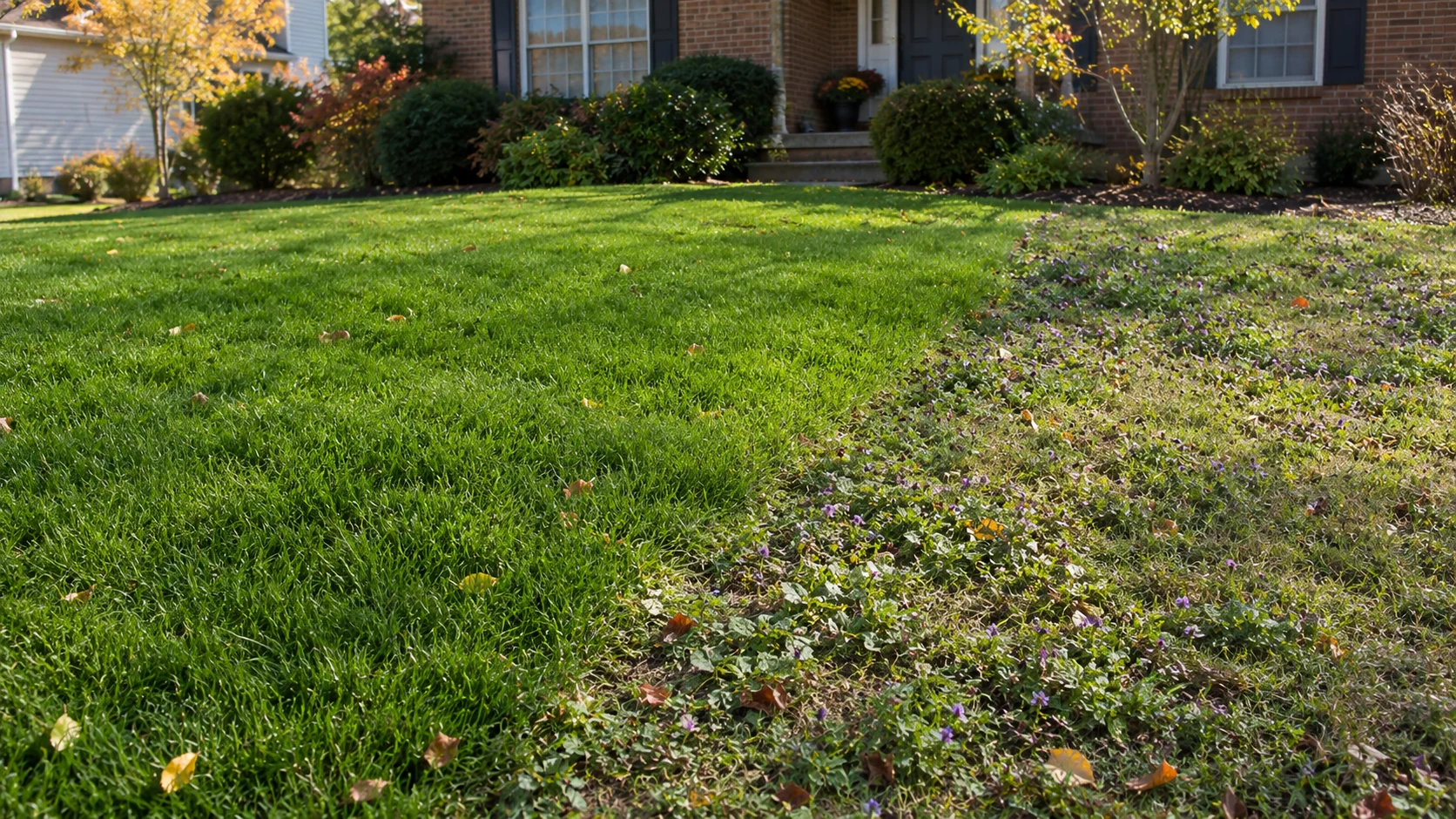
The fall pre-emergent conversation splits depending on what's growing in your yard.
Bermuda and zoysia are warm-season grasses that go dormant in fall, which makes them a clean fit for pre-emergent. There's no active growth to worry about disrupting, so the fall application is straightforward. Put it down when soil temperature hits that ~70°F mark and let the barrier do its work through winter.
Fescue is a cool-season grass, and this is where things get more complicated. Fescue's ideal fall maintenance often includes overseeding, and overseeding and pre-emergent cannot happen in the same window on the same lawn.
Pre-Emergent and Overseeding Don't Mix
This is worth understanding before you do anything to a fescue lawn in September. A pre-emergent barrier doesn't distinguish between a weed seed and a grass seed. It will stop both from germinating. If you put down pre-emergent and then overseed a few weeks later, expecting new fescue to fill in, most of that seed simply won't come up.
That means every fescue lawn has to choose one path for a given fall:
- Overseed this fall and skip pre-emergent, accepting some winter weed pressure in exchange for thicker turf, then treat weeds with a post-emergent product once they're visible.
- Apply pre-emergent this fall and skip overseeding, keeping the lawn free of new weed germination, but plan to overseed in a future season instead.
There isn't a version of fall where a fescue lawn gets both a clean pre-emergent barrier and a full overseed at once. If overseeding is the priority this year, see our aeration and overseeding service.
Choosing the Best Pre-Emergent
There's no single best pre-emergent for every lawn. The right choice depends on grass type, the specific weeds you're targeting, and whether overseeding is part of this fall's plan. What matters more than any specific product name is getting the timing right and matching it to your grass type. A warm-season lawn has far more flexibility than a fescue lawn juggling overseeding.
Is It Ever Too Late for Pre-Emergent?
Yes. Once poa annua, henbit, or chickweed have already germinated and are visible in the lawn, a pre-emergent application won't do much. At that point, a post-emergent treatment targeted at the specific weeds present is the more useful step.
This is part of why professional weed control in Atlanta and weed control in Charlotte programs track soil temperature through the season rather than working off a single fixed date. It's easier to catch the right window, and to pivot to post-emergent treatment if that window has already passed.
How Pre-Emergent Fits Into a Full Lawn Program
Weed control works best as part of a broader soil health approach rather than a single yearly application. Backyard Care Company lawn fertilization is a soil restoration program run over six visits a year. Applications include organic fertilizer, humates, biochar and microbial soil amendments across the whole property, reaching ornamentals, gardens and trees as well as the turf. Pricing starts at $152 a quarter for about 3,000 square feet. Lawns on a consistent fertilization schedule tend to respond better to pre-emergent because healthier turf naturally competes harder against weeds trying to establish.
Backyard Care Company sells mosquito control, lawn and garden fertilization, household and exterior pest control, weed control, flea and tick control, and commercial services. The service directory also carries In2Care traps, coreless aeration and overseeding, and school and daycare pest control. For a look at how fall fertilization timing relates to pre-emergent scheduling, see when to fertilize your lawn in Georgia.
Ready to get ahead of winter weeds? Get a Weed Control Quote
Frequently Asked Questions
What pre-emergent should I use in the fall?
Use one labeled for your grass type and your usual weeds. Warm-season lawns like bermuda and zoysia have more flexibility since they're dormant. Fescue lawns need to weigh pre-emergent against overseeding plans first.
What month do you put down pre-emergent?
In Atlanta and Charlotte, that's typically mid-September, timed to when soil temperature drops to around 70°F and keeps trending down, not a fixed calendar date.
Is it ever too late for pre-emergent?
Yes. Once weeds like poa annua, henbit, or chickweed have already germinated, pre-emergent won't help. A post-emergent product targeted at what's actually growing is the better move at that point.
Can I overseed after applying pre-emergent?
Not in the same window. Pre-emergent stops grass seed from germinating just as effectively as it stops weed seed, so overseeding shortly after an application will largely fail. Choose one or the other per season.
Does pre-emergent kill weeds that are already up?
No. Pre-emergent only prevents new seeds from germinating. It has no effect on weeds that have already sprouted.