
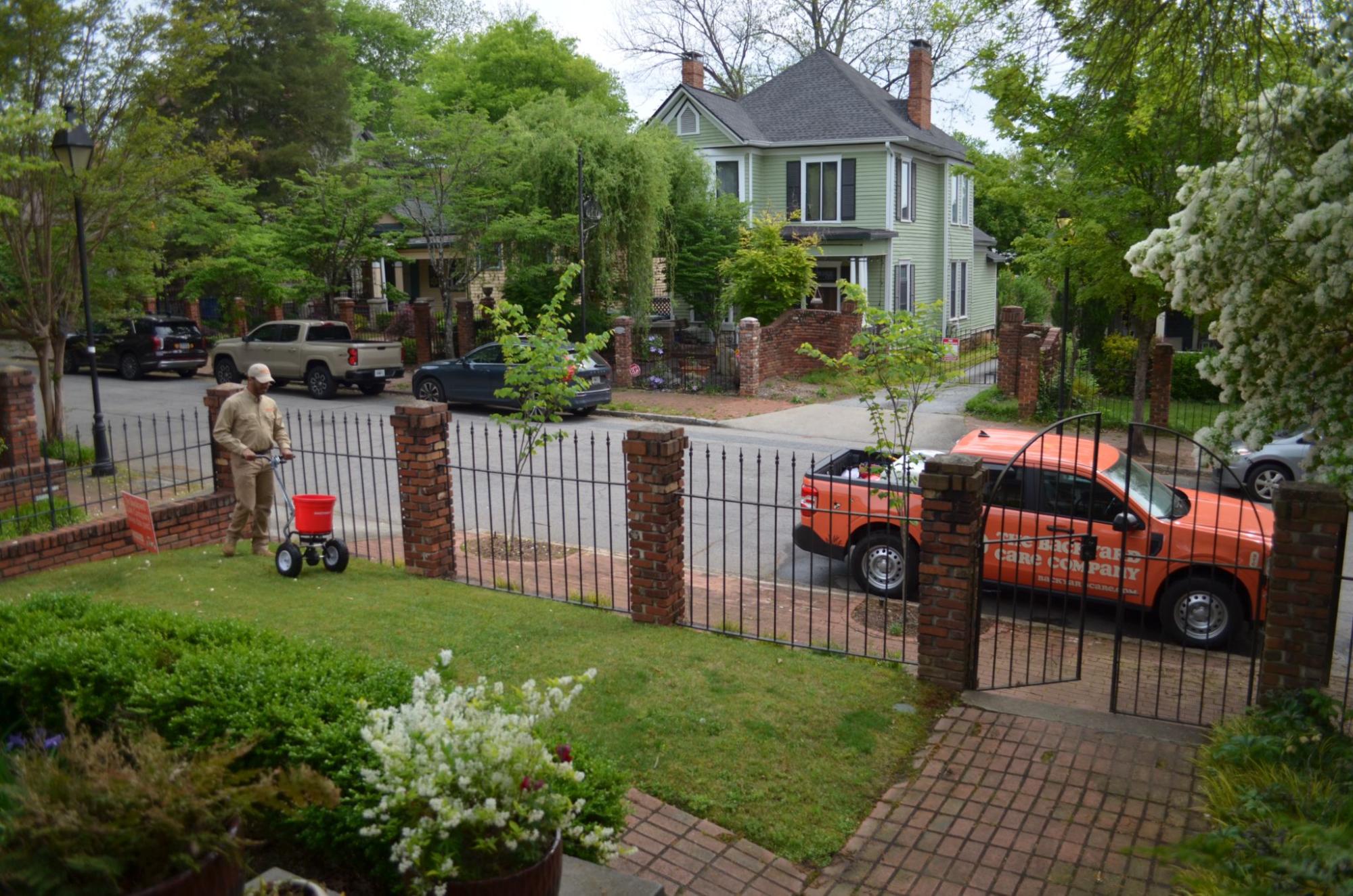
The timing might be the issue. Georgia lawns behave differently than the lawns featured in most general gardening advice. Understanding that difference is the first step toward a yard that actually responds to the care you're putting into it.
Georgia Grows Different Grass
Most homeowners in the Atlanta area are working with warm-season grasses like Bermuda, Zoysia, or Fescue. These grasses spend the winter dormant. They're conserving energy, and this matters for fertilization because feeding a dormant lawn doesn't help the grass because the nutrients just sit in the soil or run off with rain.
Once warm-season grasses wake up and start actively growing, they can use nutrients effectively. Before that point, early fertilization is mostly a waste and sometimes a step backward.
Why the Calendar Isn't Enough
A lot of fertilization guides suggest an early spring application. The problem is that early spring in Georgia isn't the same as early spring in the Midwest or Northeast, and warm-season grass doesn't respond to the calendar. It responds to soil temperature.
When soil temperatures consistently reach 65°F, warm-season grasses begin actively growing and nutrient uptake increases significantly. In the Atlanta area, that typically happens somewhere between late March and mid-April, though it can shift by a few weeks depending on the year. Fertilizing before greenup is fully underway introduces nutrients at a time when the grass can't efficiently use them and that's exactly when weeds can get a head start instead.
Georgia's Practical Fertilization Window
For most warm-season lawns in Georgia, the fertilization season runs from late spring through late summer. Here's how it generally breaks down.
- The first application should follow genuine greenup, when the lawn has shifted from dormancy into active growth, typically sometime in April. A moderate nitrogen application at this point supports the lawn as it comes out of dormancy without pushing excessive early growth that the roots can't yet support.
- A second application in late May or June aligns with peak summer growth, when Bermuda and Zoysia are at their most vigorous and can make full use of additional nitrogen.
- A late-summer application in July or August can help sustain color and density heading into fall, though at a lighter rate. This is especially useful for Bermuda lawns that tend to thin without consistent feeding through the heat.
After early September, fertilization for most warm-season grasses should stop. Late-season nitrogen encourages tender new growth that's vulnerable to early cold snaps, and in Georgia, those can arrive without much warning.
Your Grass Type Changes the Equation
Bermuda grass is a heavy feeder. Regular fertilization throughout the growing season keeps Bermuda dense, green, and competitive against weeds. Zoysia is more moderate, meaning it benefits from a structured fertilization schedule but doesn't need the frequency that Bermuda often does.
Centipede is a different story entirely. It's naturally low-maintenance and quite sensitive to excess nitrogen. Over-fertilizing centipede lawns is one of the most common mistakes Georgia homeowners make, and it can cause long-term damage to a grass that actually thrives with a lighter touch. If you have centipede, more fertilizer is rarely the right answer. St. Augustine, more common in coastal Georgia, falls somewhere in between. It responds well to moderate fertilization but benefits from consistent monitoring.
If you're not sure which grass type you have, that's worth figuring out before you establish any fertilization plan. The right product, rate, and timing differ enough between varieties that a one-size-fits-all approach often underperforms.
Common Mistakes That Set Georgia Lawns Back
Fertilizing too early is the most frequent misstep. Cold soil temperatures in February and early March mean warm-season grass simply isn't ready. Applying fertilizer at this stage can encourage weed growth rather than turf. Fertilizing too late in fall presents the same problem from the other direction.
Applying the same fertilizer to every lawn regardless of grass type is another common issue. Generic lawn fertilizers aren't calibrated for centipede's low nitrogen requirements or the specific needs of a high-traffic Bermuda yard.
Lastly, soil testing gets skipped more often than it should. Georgia soils vary significantly, and without knowing your existing nutrient levels and pH, it's easy to apply what the lawn doesn't need while missing what it actually does.
A Long-Term Approach to Lawn Fertilization
Consistent, properly timed fertilization builds density that naturally competes with weeds, improves drought tolerance during Georgia's dry summer stretches, and supports root development that carries the lawn through heat stress.
That kind of consistent improvement takes a structured plan, and Backyard Care's fertilization program is built around Georgia's growing season and calibrated to the specific turf types common in the Atlanta area. Rather than applying the same product on the same schedule across every lawn, the approach accounts for grass type, seasonal timing, and long-term turf health.
Reach out to us to talk through the right fertilization schedule for your yard this season.
Frequently Asked Questions
What fertilizer is best for Georgia lawns?
It depends on your grass type. Bermuda benefits from a nitrogen-rich fertilizer applied multiple times during the growing season. Centipede requires much less nitrogen and can be damaged by heavy applications. Knowing your turf type—and ideally your soil's existing nutrient levels—helps you choose the right product and avoid over-applying.
Why does my lawn look worse after I fertilized it?
Timing and grass type are usually the culprits. Fertilizing too early, too late, or with the wrong product for your turf can cause yellowing, burning, or uneven growth. Centipede lawns in particular are prone to fertilizer-related stress when fed too aggressively.
How often should I fertilize my lawn in Georgia?
Most warm-season lawns in Georgia benefit from two to three applications per year, spread across the growing season from spring through late summer. The right frequency depends on your grass type, the condition of the lawn, and your overall goals.
Does Backyard Care Company offer lawn fertilization services in Atlanta?
Yes. Backyard Care Company offers a structured fertilization program designed around Georgia's warm-season turf and the specific conditions of the Atlanta area. Learn more or get in touch to talk through the right plan for your yard.